
Advanced Odor Removal Oklahoma City: Common Mistakes to Avoid
Persistent odors after water, fire, mold, or sewage damage mean one thing: the source was not fully eliminated. Masking the smell creates a second problem on top of the first. Here is what actually goes wrong, and what proper remediation looks like.
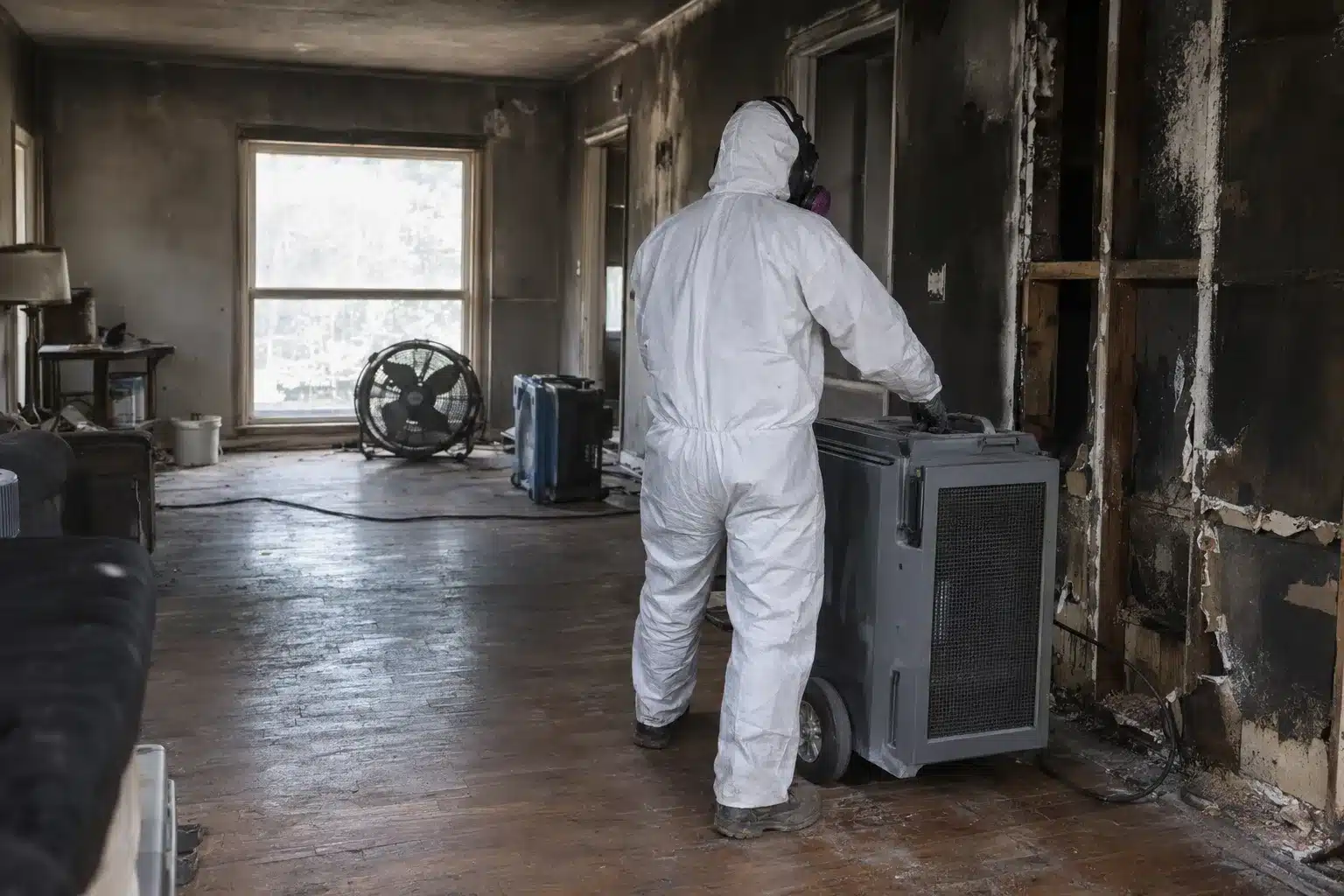
Why Odors Return After a "Cleanup"
Most odor problems that come back were never fully resolved. A mop-up crew can remove visible debris and surface moisture, but odor-causing compounds absorb into drywall, subfloor, framing, and insulation within hours of exposure. Air freshener sits on top. The chemistry underneath keeps working.
Smoke particles from a kitchen fire, for example, are oily and acidic. They penetrate porous surfaces like drywall and wood grain rather than just coating them. The same is true for hydrogen sulfide from a sewage backup or mycotoxins from active mold colonies. Wiping the surface down does not reach what is inside it.

Oklahoma City humidity compounds the problem. When indoor relative humidity climbs above 60 percent, dormant odor compounds reactivate. A house that smelled fine in January can smell terrible in June. Structural drying is not optional when moisture is involved.
Effective odor removal means identifying the specific compound causing the smell, reaching it at the depth it has penetrated, and either neutralizing or removing it entirely. The process differs depending on whether you are dealing with smoke, mold, sewage, or water damage. Treating the wrong source wastes time and money.
- Fire & Smoke
- Mold & Mildew
- Sewage Backup
- Water Damage
Mistake #1: Treating the Symptom, Not the Source
Ozone machines, aerosol sprays, and plug-in deodorizers are commonly used as the entire treatment. They work temporarily on surface-level smells. They do nothing to combustion byproducts locked inside framing or microbial waste buried in wall cavities. Once the product wears off, the smell returns.
Mistake #2: Skipping Moisture Verification
Any water-related odor job needs a moisture map first. Restoration professionals use thermal imaging and pin-type or pinless moisture meters to find moisture hidden inside wall assemblies and under flooring. Skipping this step and going straight to deodorization almost guarantees the odor comes back with mold growth behind it.
Signs you need structural drying in Oklahoma CityMistake #3: Using Ozone Without Containment
High-concentration ozone treatment requires the structure to be vacated for a minimum of four hours, typically longer for larger spaces. Ozone is a lung irritant at the concentrations needed to break down organic odor compounds. Running a machine without proper containment and evacuation exposes occupants to risk while delivering uneven odor reduction.
More Mistakes That Make Odors Worse
Mistake #4: Painting Over Smoke-Stained Surfaces
Standard latex paint does not seal smoke residue. Within weeks, tannins and acidic compounds bleed through and the smell returns. Odor-blocking shellac-based primers are required first. Without chemical sealing as a step, repainting a fire-damaged room is cosmetic, not curative.
Permanent smoke odor removal OKCMistake #5: Ignoring HVAC and Ductwork
Odor compounds travel through a forced-air system fast. A house fire pushes soot into return air ducts within minutes. A mold colony near a supply vent spreads spores to every room the system serves. Cleaning visible surfaces without addressing the duct system guarantees recontamination every time the system runs.
Signs you need fire & smoke restorationMistake #6: Delaying Sewage Odor Treatment
Sewage contains category 3 biohazardous material. The hydrogen sulfide and ammonia compounds that cause the odor also indicate the presence of pathogens. Waiting more than 24 to 48 hours after a sewage backup significantly increases both structural contamination depth and remediation cost. Early response is faster and cheaper.
Raw sewage removal OKCMold Odor: A Specific Problem That Needs Specific Treatment
Musty smell is often the first sign of an active mold colony, not visible growth. Mold produces microbial volatile organic compounds (MVOCs) as a metabolic byproduct. These are detectable by smell long before a colony is large enough to see.

Air freshener cannot address MVOCs. The source colony must be found, contained, and physically removed. The EPA's mold guidance recommends that colonies larger than ten square feet be handled by trained professionals. In Oklahoma City, crawlspaces, basement walls, and the underside of roof sheathing after a leak are common locations.
Oklahoma's climate creates a long mold season. The combination of summer humidity and air-conditioned interiors creates condensation on cold surfaces inside walls. A certified mold inspection identifies both visible and hidden colonies before any odor treatment begins.
What a Professional Odor Job Actually Looks Like
- Source identification - Moisture meters, thermal imaging, and air sampling pinpoint the exact origin. No assumption, no guessing.
- Containment - Affected areas are isolated with poly barriers and negative air pressure to prevent cross-contamination during work.
- Physical removal - Saturated or contaminated materials that cannot be cleaned are removed. This is often drywall, insulation, or carpet pad.
- Chemical treatment - EPA-registered antimicrobials, hydroxyl generators, or thermal fogging applied to remaining surfaces based on odor type.
- Structural drying - Industrial dehumidifiers and air movers run until moisture readings reach dry standard, typically 3 to 5 days for wall assemblies.
- Post-treatment verification - Air quality or clearance testing confirms the source is gone, not just suppressed.
Odor Removal by Damage Type
Fire and Smoke Odor
Smoke odor after a fire has three layers. First is visible soot on surfaces. Second is oily residue absorbed into porous materials. Third is pyrolysis gases embedded in structural framing. Cleaning soot removes the first layer only.
Professional treatment typically involves dry-ice blasting or chemical sponge cleaning, followed by thermal fogging with a deodorizing agent that penetrates the same pathways smoke traveled. Porous materials that absorbed heavy smoke, including drywall and insulation, are usually replaced rather than cleaned because the cleaning cost exceeds replacement cost.
Most residential smoke odor jobs in Oklahoma City take three to five days from initial cleaning through final sealing and air quality check. Larger homes or heavy smoke involvement take longer.
Emergency fire damage repair & smoke odor removal OKCWater and Flood Odor
Standing water that sits longer than 48 hours almost always produces a musty odor, even if the water source itself was clean. Bacteria and mold begin growing in wet building materials within that window. The odor after a burst pipe, appliance leak, or flooded basement is typically microbial, not chemical.
Water extraction removes the bulk of moisture, but wall cavities and subfloor assemblies retain water that extraction equipment cannot reach. Structural drying with air movers and dehumidifiers then brings moisture content down to acceptable levels. In Oklahoma City, summer drying jobs typically take longer because outdoor humidity slows evaporation.
24/7 emergency water damage restoration OKCSewage and Biohazard Odor
Sewage odor is the hardest to eliminate because the compounds causing it, hydrogen sulfide and ammonia primarily, are not just surface contaminants. They absorb into concrete, drywall, and wood rapidly. Floor drains, sump pits, and subfloor areas are common reservoirs that deodorizers cannot reach.
Category 3 water (raw sewage) requires PPE, containment, and EPA-registered disinfectant as a legal baseline in most jurisdictions. DIY cleanup of a significant sewage backup is genuinely hazardous and rarely effective because the odor-causing bacteria survive in areas that are hard to access without professional equipment.
Raw sewage biohazard decontamination OKCCrawlspace and Subfloor Odor
Crawlspaces in older Oklahoma City homes, particularly pier-and-beam construction common in Edmond and central OKC neighborhoods, collect ground moisture year-round. That moisture feeds mold on floor joists and subfloor sheathing. The musty smell enters the living area through gaps in the subfloor and registers, often strongest in the morning when the house has been closed overnight.
Effective crawlspace odor treatment includes vapor barrier installation or replacement, mold remediation of affected structural wood, and mechanical ventilation or encapsulation depending on the specific crawlspace conditions. Deodorizing without addressing the moisture source solves nothing.
Crawlspace water extraction OKC guideTools That Work vs. Tools That Do Not

Methods That Eliminate Odor
- Hydroxyl generators - Safe for occupied spaces at recommended settings. Produce hydroxyl radicals that break down odor compounds at the molecular level. Slower than ozone but more practical for most residential jobs.
- Thermal fogging - Heats deodorizing solvent to a fog that penetrates the same micro-pores smoke or odor compounds entered. Highly effective for fire odor when paired with physical cleaning.
- EPA-registered antimicrobials - Applied to mold-affected surfaces after physical removal. Required for sewage contamination cleanup. Kills the biological source of the odor rather than covering it.
- Shellac-based primer sealer - Applied to smoke-stained surfaces before repainting. Prevents bleed-through of tannins and smoke compounds. Required step that general contractors often skip.
Methods That Mask, Not Eliminate
- Aerosol deodorizers - Febreze and similar products deposit a fragrance on surfaces. They do not chemically alter the odor compound. Effect lasts hours. Repeated use can leave residue that itself becomes a problem.
- Activated charcoal bags - Useful for very light, ambient odors. Completely ineffective against embedded smoke, mold, or sewage odor in structural materials. A legitimate product used in the wrong context.
- Consumer ozone machines - Low-output units sold at big-box stores do not generate sufficient ozone concentration for structural odor elimination. Industrial-grade ozone treatment at proper concentration requires professional handling.
- Baking soda on wet materials - Works on surface pH and very mild odors. On wet carpet, pad, or drywall it has essentially no effect on the mold or bacteria causing the smell. Also retains moisture, which accelerates mold growth.
When to Call a Professional vs. Handle It Yourself
DIY Is Reasonable When:
- The odor source is identified, visible, and isolated to a small area (under 10 sq ft)
- The cause is a single, contained event with no structural material saturation
- Moisture readings confirm the area is dry before any deodorizing begins
- There is no sewage or biohazard involvement
- The odor has not persisted after an initial cleaning attempt
Call a Professional When:
- The odor returns within days or weeks of cleaning
- You cannot find the source or it is inside a wall, floor, or ceiling
- Sewage, fire, or flood water is involved
- You see or suspect mold growth larger than one square foot
- Occupants are experiencing respiratory symptoms or headaches
- You are selling the property and need documentation of successful remediation
The IICRC, the industry standards body for restoration contractors, publishes specific protocols for each odor category. Professional contractors following IICRC S500 (water) and S700 (fire and smoke) standards use documented, systematic processes.
IICRC restoration standards (iicrc.org)Hardwood Floors and Odor: A Special Case
Hardwood flooring holds water in the wood fibers and between boards. As boards cup and swell, gaps open that allow moisture and organic material to accumulate under the floor. That trapped material becomes the odor source, and it is out of reach of surface cleaning.
Salvaging hardwood after water damage is time-critical. Boards that have been wet for less than 48 hours can often be dried in place with mat drying systems placed on top of the floor. Beyond that window, cupping becomes severe and the subfloor beneath is almost certainly wet. At that point, the question becomes whether drying or replacement is more economical.
Save your Oklahoma City hardwood: advanced floor drying guideInsurance Coverage for Odor Remediation in Oklahoma City
Standard homeowner's policies in Oklahoma typically cover odor remediation when it results directly from a covered peril, for example, smoke odor from a fire, or mold odor from a burst pipe. Odor from gradual moisture accumulation or deferred maintenance is almost never covered.
Document everything before any cleanup begins. Photographs, moisture readings, and air quality samples taken at the time of the event are evidence for your claim. Restoration contractors who carry proper licensing and follow IICRC protocols produce documentation that insurance adjusters accept. General contractors and handymen typically do not produce this documentation, which can complicate or void a claim.
How to file a water damage insurance claim in OKCEvery Service That Eliminates Odor at Its Source
Odor is a symptom. These are the services that treat the cause. Available 24 hours a day across OKC, Norman, Edmond, and Mustang.
The Smell Is Not Going Away on Its Own. Call Before It Gets Worse.
Every hour after water, fire, mold, or sewage exposure, the odor compounds penetrate deeper and the remediation gets more involved. Priority Restoration OKC responds across Oklahoma City, Norman, Edmond, and Mustang, day or night.
Free on-site estimates. No charge to assess and tell you exactly what is causing the problem and what it will take to fix it. Call 405-357-1881 or schedule through the contact page.
What to Do Right Now
- Do not use aerosol sprays or air fresheners. They coat your surfaces with residue and can interfere with professional treatment products applied later.
- Ventilate if it is safe to do so. Open windows and doors if weather permits. For sewage or fire situations, avoid disturbing the affected area until a professional assesses it.
- Document with photographs and video. Before any cleanup, document the full extent of damage. This is your insurance evidence.
- Call 405-357-1881. A technician can assess the situation and tell you over the phone whether immediate response is warranted or whether it can be scheduled.
Priority Restoration OKC serves Oklahoma City, Norman, Edmond, Mustang, and surrounding communities. For OSHA guidelines on indoor air quality and hazardous materials, see osha.gov.