
Crawlspace Water Extraction OKC: A Homeowner's Guide
Standing water under your house destroys joists, insulation, and vapor barriers within days. This guide explains exactly what crawlspace water extraction involves, when to call a pro, and what to expect from the process.
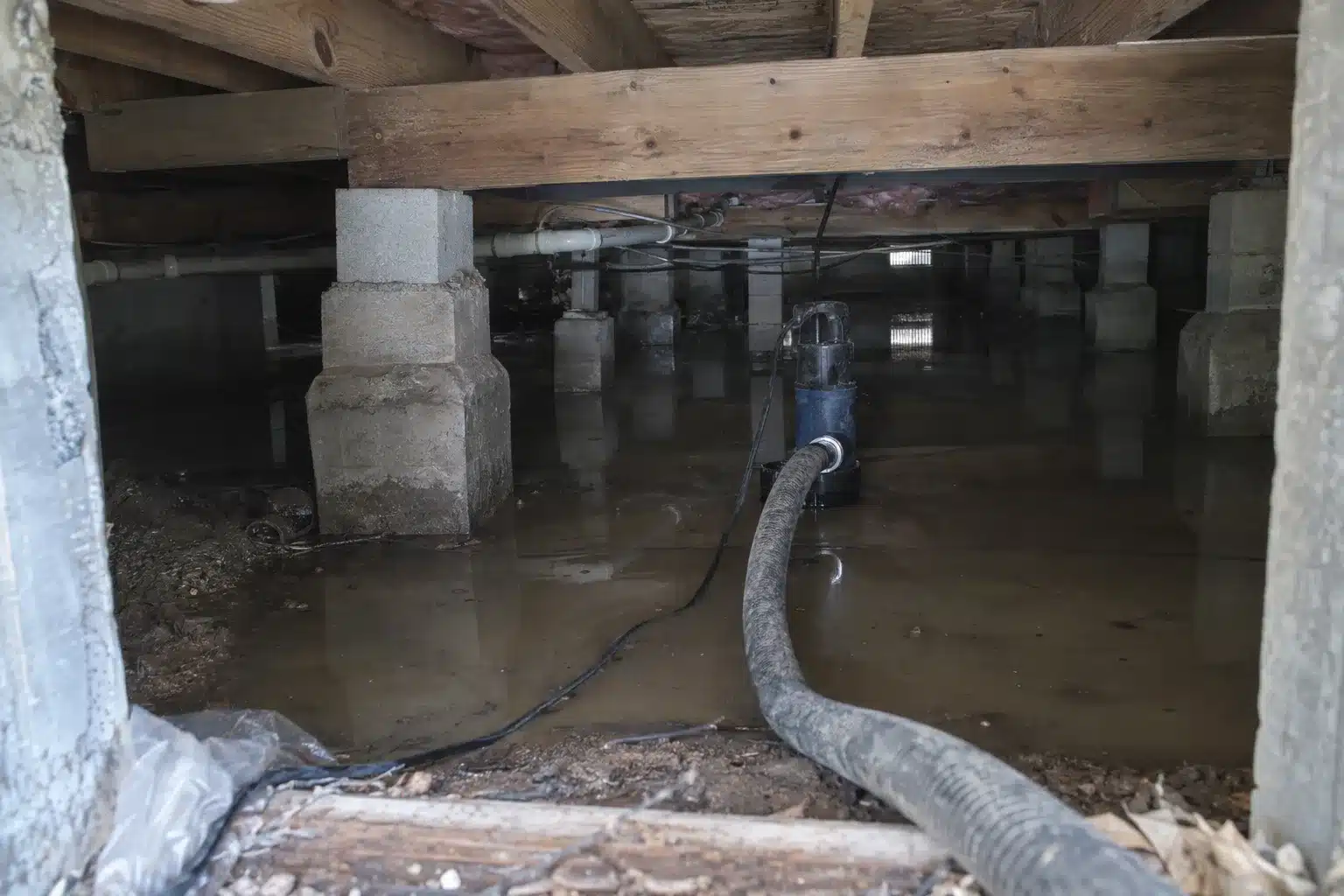
Why Crawlspace Water Is a Structural Emergency
Water under a house is not a slow problem. Oklahoma clay soil holds moisture and directs it toward foundations. A single rain event, a plumbing leak, or a broken vapor barrier can put several inches of standing water in a crawlspace overnight. Wood starts absorbing moisture immediately. Within 24 to 48 hours, conditions are right for mold.
Most Oklahoma City homes built before 1980 have vented crawlspaces, which means outside air, humidity, and pests can enter freely. When that air carries moisture, it condenses on cooler joists and insulation. The insulation sags, loses R-value, and traps the moisture it was supposed to stop.
Extraction is the first step, not the only one. Getting the water out matters, but the wood framing and vapor barrier have to be dried to safe moisture levels before any repairs happen. Closing up a crawlspace with residual moisture inside is the fastest way to create a serious mold problem six months later.
What Causes Crawlspace Flooding in OKC?
- Heavy rainfall and poor grading - Oklahoma City averages around 36 inches of rain per year. Lots that slope toward the foundation funnel that water directly under the house.
- Plumbing leaks - a slow drip from a supply line or drain under the house can pool undetected for weeks before someone notices a smell.
- Burst or frozen pipes in winter. OKC had multiple pipe-freeze events in recent years. If pipes run through an uninsulated crawlspace, they are at risk every time temperatures drop into the teens. See our guide on burst pipe water damage in OKC.
- Failed sump pump or the absence of one. Homes in low-lying areas of Norman, Moore, and Edmond are especially vulnerable during spring storms.
- Appliance overflows from washing machines, water heaters, or HVAC condensate lines sitting above a crawlspace. Read more about appliance leak water damage in OKC.

How to Tell If Your Crawlspace Has Water
Most homeowners discover a crawlspace problem through indirect signs before they ever look underneath. Watch for these:
- A musty or earthy smell coming through floor vents or near the access hatch
- Floors that feel soft, springy, or have developed a noticeable bounce
- Visible white or gray mold on baseboards or near floor edges
- Higher-than-normal indoor humidity or condensation on windows during summer
- Pest activity, particularly termites and wood-boring beetles, which follow moisture
If you see any of these, open the access hatch and look with a flashlight. Standing water is obvious. But moisture damage in joists and insulation can be present even without visible pooling. A moisture meter reading above 19% in wood framing means the structure is already absorbing damage. The EPA's mold guidance recommends keeping indoor humidity below 60 percent to prevent fungal growth.
What Crawlspace Water Extraction Actually Involves
Inspection and Moisture Mapping
The job starts with a full crawlspace inspection. A technician uses a moisture meter to map wet zones in the joists, subfloor, and any framing members. Thermal imaging helps identify moisture that has wicked into areas the flashlight can't show clearly. This step takes 30 to 60 minutes depending on crawlspace size, and the data drives every decision that follows.
Standing Water Removal
Submersible pumps handle large volumes fast. For crawlspaces with several inches of standing water, a truck-mounted extraction unit is more efficient than portable equipment. The goal is getting bulk water out before drying begins. Trying to dehumidify a space that still has standing water just burns runtime without making progress. Most extraction jobs clear in 2 to 4 hours.
Structural Drying
After extraction, high-capacity air movers and commercial dehumidifiers go in. Equipment gets positioned to create airflow across every wet surface, not just the floor. This is the longest phase. Depending on how wet the framing is, structural drying typically takes 3 to 5 days of continuous equipment operation. Daily moisture readings confirm progress. Learn more about structural drying and dehumidification in Oklahoma City.
Mold Assessment and Remediation
Any crawlspace that held water for more than 48 hours needs a mold inspection before closing back up. Mold can colonize wood within that window, especially during Oklahoma summers when crawlspace temps run warm. If mold is present, remediation happens before vapor barrier work begins. See our page on mold remediation in OKC for what that process involves.
Vapor Barrier Repair or Replacement
A damaged vapor barrier is often the original problem, not just a casualty of it. Older homes may have thin 6-mil poly that has shifted, torn, or deteriorated. Modern standard is 12-mil or thicker, overlapped and sealed at seams, and run up the foundation walls. If the existing barrier is intact and undamaged, it can usually stay. If it's torn or saturated, it comes out and gets replaced after the framing is dry.
Source Identification and Prevention
Extracting water without finding the source means doing this again in six months. The technician identifies whether water entered from a plumbing failure, surface drainage, or condensation. From there, recommendations include regrading, vent adjustments, sump pump installation, or repairs to specific plumbing. A sump pump is worth considering for homes in low areas. See our OKC sump pump installation cost guide for current pricing context.

Does Insurance Cover Crawlspace Water Damage?
Coverage depends on the source of water. Standard homeowners policies in Oklahoma typically cover sudden and accidental discharge from plumbing or appliances. A burst pipe under the house that floods the crawlspace is usually covered. Groundwater intrusion and flooding from outside are generally not covered under a standard policy and require separate flood insurance through the National Flood Insurance Program.
Gradual damage from a slow leak that went unaddressed may be denied as a maintenance issue. Document everything before cleanup begins: photos, video, and dates. Read our detailed guide on how to file a water damage insurance claim in OKC.
Priority Restoration OKC works directly with homeowners during the claims process. We document damage with photos and moisture readings that adjusters need, and we can communicate scope of work directly with your insurer.
The IICRC S500 standard governs how water damage restoration work should be documented and performed. Insurers recognize this standard, and following it protects your claim. Visit the IICRC's website to understand what certified restoration work looks like.
When to Call vs. Handle It Yourself
A shop vac works for minor moisture if the crawlspace has no standing water, the exposure time was short (under a few hours), and there's no sign of mold or structural damage. That covers a small percentage of cases.
Call a professional when: there is visible standing water, the area smells musty, the water source is unknown, the framing looks discolored or has visible growth, or the water came from a sewage line. Sewage-contaminated water is a Category 3 hazard. Personal protective equipment and antimicrobial treatment are required, not optional. See our sewage backup cleanup page if that applies to your situation.
The trade-off with DIY drying is equipment. Consumer dehumidifiers move air at a fraction of the rate commercial units do. Getting wood framing below 15% moisture content with a box store dehumidifier in a 1,500-square-foot crawlspace can take weeks, which is long enough for mold to establish. Commercial drying equipment is rented, but setup and monitoring still require expertise to get right.

Crawlspace Moisture Control After Extraction
Extraction solves the immediate problem. Long-term moisture control is a separate conversation. Options range from basic to comprehensive:
Vapor barrier upgrade.
Going from 6-mil to 20-mil poly, sealed at all seams and terminations, significantly reduces ground moisture entering the space. Cost-effective for most homes.
Crawlspace encapsulation.
A full encapsulation seals all walls and the floor, and typically includes a dedicated crawlspace dehumidifier. This is the highest level of moisture control and is worth it for homes with chronic moisture problems or those being prepped for sale. Costs vary significantly with square footage and access difficulty.
Drainage improvements.
French drains, sump pumps, and regrading the lot address the source of water rather than just the symptom. A sump pump installation runs roughly $1,000 to $3,000 installed in the OKC area, depending on depth, pump type, and whether a backup system is included.
Vent adjustments.
Some vented crawlspaces benefit from closing foundation vents in summer and relying on a conditioned or actively ventilated system instead. The right approach depends on your specific climate zone and construction type. Oklahoma's humid summers make this a nuanced call.
For related concerns on other areas of the home, our guides on hardwood floor water damage drying and roof leak water mitigation in OKC cover related topics in similar depth.
Frequently Asked Questions
Pumping out standing water usually takes 2 to 4 hours. Structural drying runs 3 to 5 days with equipment running continuously. Total job time from first call to cleared equipment is typically 5 to 7 days for a standard crawlspace water event.
It depends on the source. Plumbing failures and appliance leaks are usually covered. Groundwater and flooding require separate flood insurance. Slow or gradual leaks may be excluded as maintenance issues. Document everything immediately and contact your insurer before major cleanup begins.
Not safely, not if there's significant moisture. Passive drying without equipment takes far too long. Wood framing stays wet, mold grows, and insulation that stays damp long enough loses structural value. This is one situation where waiting costs more than acting.
If the water was present for more than 48 hours, or if you see any discoloration on wood, a visual inspection by a restoration professional is the minimum step. Lab testing adds cost but provides documentation useful for insurance claims and real estate disclosures. See our OKC mold inspection cost guide for realistic price ranges.
Cost varies with the volume of water, crawlspace size and accessibility, degree of structural damage, and whether remediation is needed. A straightforward extraction and drying job in a clean, accessible crawlspace runs less than a job requiring mold remediation and vapor barrier replacement. Call us at 405-357-1881 for a free estimate. There's no charge to come out and assess.
Priority Restoration OKC handles crawlspace extraction across Oklahoma City, Norman, Edmond, and Mustang. We are available 24 hours a day. You can also visit our full crawlspace water removal service page for more detail on how we scope and execute these jobs.
Service Areas for Crawlspace Water Extraction
Priority Restoration OKC serves the entire OKC metro area. Each market has its own soil conditions, drainage patterns, and housing stock that affect how crawlspace jobs unfold.
Related Services
Water in your crawlspace right now?
Every hour standing water stays under your house, it works deeper into your framing. Call us now. We answer 24 hours a day, dispatch same day, and give you a free written estimate before work starts.