
Signs You Need Fire and Smoke Damage Restoration Oklahoma City And When You Don't
After a fire, most homeowners don't know where the line is between wiping things down themselves and calling a professional. That line matters. Get it wrong and you're dealing with hidden smoke penetration, structural compromise, or a soot exposure problem weeks later.
Priority Restoration OKC responds 24/7 across Oklahoma City, Norman, Edmond, and Mustang. Free estimates.

About Priority Restoration OKC
Local Crew. Real Expertise.
Priority Restoration OKC is a locally owned restoration contractor based in the Oklahoma City metro. We handle fire and smoke damage, water damage, mold remediation, and storm restoration for homeowners and commercial property managers across OKC, Norman, Edmond, and Mustang.
We are available around the clock because disasters don't happen on a schedule. When you call after a fire at 2 a.m., you get a real person who can dispatch a crew, not a voicemail.
Our process is straightforward: assess the scope, contain further damage, document everything for your insurance claim, then restore. No unnecessary upsells, no vague timelines. We tell you what we found and what it takes to fix it.
Our Fire Restoration ServicesFire and Smoke Damage Restoration
Full-scope restoration from soot removal and smoke odor elimination to structural drying and rebuild coordination.
Water and Mold Remediation
Emergency water extraction, structural drying, mold inspection, and remediation across the OKC metro.
Storm and Wind Damage
Rapid response after Oklahoma storms, tornadoes, and severe weather events. Board-up, tarping, and full restoration.
Commercial Disaster Restoration
Large-scale restoration for commercial property managers, minimizing downtime and protecting asset value.
Fire & Smoke Damage - What You Need to Know
Signs You Need Professional Restoration And When You Don't
Understanding the difference between a surface cleanup and structural damage restoration can save you thousands and protect your health.
Clear Signs You Need a Restoration Crew
If any of these apply after a fire in your Oklahoma City home, don't attempt a DIY cleanup.
- Visible soot on walls, ceilings, or HVAC vents. Soot is acidic. Within 24-48 hours it begins etching plaster, discoloring paint, and pitting metal surfaces. Wiping it with a household cloth spreads it further and forces particles into the surface.
- Persistent smoke odor beyond the room where the fire occurred. Smoke migrates through HVAC systems, wall cavities, and subfloor gaps within hours. If you smell smoke in a room that wasn't affected, the odor is already embedded in porous materials. Consumer-grade air fresheners don't reach those surfaces. Professional smoke odor removal in OKC uses thermal fogging and hydroxyl generators that penetrate the same way smoke did.
- Charring or blackening of structural materials. Charred drywall, framing lumber, or subfloor doesn't just look bad - it means the material has lost structural integrity. A structural assessment comes before any cosmetic repair.
- Water damage from firefighting. Fire suppression typically introduces hundreds of gallons of water. That water soaks drywall, flooring, and insulation. Without extraction and drying, mold growth begins within 24-72 hours. Fire and water damage frequently occur together, which is why our fire and smoke damage restoration in OKC always includes a water assessment.
- Fire involved synthetic materials, plastics, or electronics. Burning synthetic materials releases hydrogen cyanide, benzene, and other toxic compounds. The residue on surfaces is not safe to handle without respirators and proper PPE. This is not a DIY cleanup scenario regardless of how small the fire appeared.

The 48-Hour Window
The first 48 hours after a fire determine the scope and cost of restoration. Soot damage accelerates, moisture from firefighting begins promoting mold, and smoke compounds continue to react with building materials.
The U.S. Environmental Protection Agency notes that combustion byproducts including fine particulate matter and volatile organic compounds pose serious respiratory risks, especially in enclosed spaces where residue has settled.
When in doubt, call anyway. A walk-through assessment is free. It takes 30 minutes and tells you exactly what you're dealing with. That's almost always worth the call, even if the answer is "you can handle this yourself."
When You Likely Don't Need Full Restoration
Not every smoke event triggers a full restoration job. A very small, contained incident with no structural involvement may be manageable without professional help. Here's what that looks like:
- A single small item burned. A small piece of food burned on a stovetop or a candle that scorched a single spot. No structural contact, contained to one hard surface.
- No visible soot spread beyond the immediate area. If the affected surface wipes clean with a dry chemical sponge and there's no odor in adjacent rooms after 24 hours, the smoke did not migrate into the structure.
- No soft materials were exposed. Drywall, wood, carpet, upholstered furniture, and insulation absorb smoke. If the fire was completely isolated from porous materials, the cleanup scope is different.
Even in these cases, verify that your HVAC system did not run during or after the fire. If it did, smoke particles have been distributed throughout your duct system and every room it serves. That changes the answer quickly.
What the Restoration Process Actually Looks Like
When Priority Restoration OKC arrives at your home, here's the sequence of work:
Initial Assessment and Safety Check
We assess structural stability, air quality, and the extent of smoke and soot penetration before anyone enters the structure to work. This includes checking for gas line integrity and electrical hazards from the fire and firefighting water.
Board-Up and Containment
Open windows, doors, and roof penetrations are secured. Unaffected areas of the home are isolated with containment barriers so restoration work doesn't cross-contaminate clean zones.
Water Extraction and Structural Drying
Firefighting water is extracted and affected materials are dried using commercial dehumidifiers and air movers. Moisture readings are taken across walls, subfloor, and framing. Drying typically takes 3-5 days depending on material type and volume of water introduced.
Soot and Smoke Residue Removal
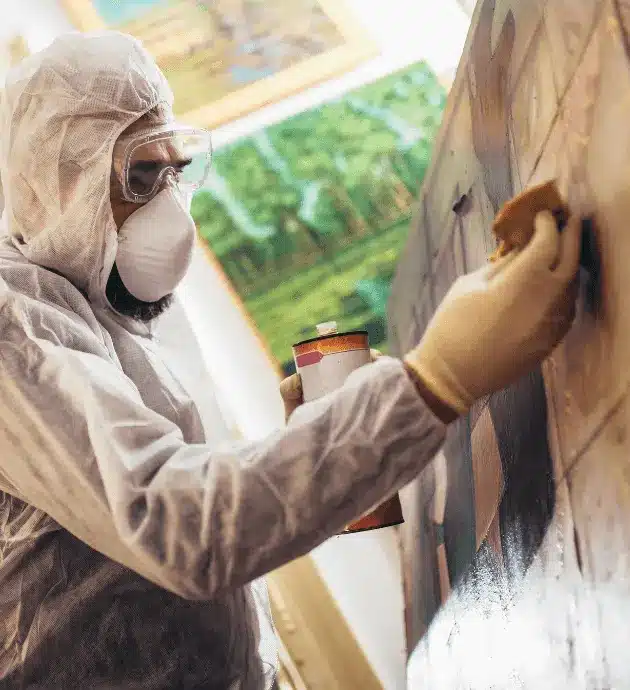
Dry chemical sponges are used before any wet cleaning. Wet soot without prior dry removal spreads the damage. HEPA vacuuming follows, then surface cleaning with appropriate chemistry matched to the surface type - different treatments for wood, plaster, concrete, and metal.
Smoke Odor Elimination
Thermal fogging and hydroxyl generation treat the air and penetrate porous surfaces. Ozone treatment may be used in unoccupied spaces. Duct cleaning is scheduled if the HVAC system ran during the fire. This is typically the last odor-producing step before reconstruction begins.
Documentation for Insurance
Throughout the process, we document damage scope, materials affected, and work completed. This documentation supports your insurance claim and prevents disputes over covered losses. See our guide on how to file a damage insurance claim in OKC for what to prepare before we arrive.
Reconstruction and Final Clearance
Charred framing, drywall, and flooring are replaced. Paint and surface finishes are applied after odor clearance testing. For homes with significant structural loss, the rebuild phase can take several weeks. Smaller restoration jobs from contained fires are often complete within 3-7 days.
Why Speed Matters
- 1 hrSoot begins etching metal and glass
- 24 hrPermanent yellowing of walls and surfaces
- 48 hrMold growth possible from firefighting water
- 72 hrRestoration costs increase significantly
The Health Risks People Miss
The visible soot is not the main danger. The particles you can't see are. Fires produce fine particulate matter smaller than 2.5 microns (PM2.5) that stays airborne for hours and penetrates deep into lung tissue. The International Agency for Research on Cancer classifies soot as a Group 1 human carcinogen.
Common materials in OKC homes - vinyl flooring, foam insulation, painted drywall - release hydrogen cyanide, phosgene, and hydrochloric acid when burned. These compounds settle into surfaces and off-gas for days after the fire is out. Staying in a home with this residue without proper air filtration is a real health risk, not a precaution.
Children, elderly residents, and anyone with respiratory conditions face elevated risk. If anyone in your household has asthma or COPD, don't re-enter until the structure has been professionally assessed and ventilated.
What about smoke from a neighbor's fire?
If an adjacent structure burned and smoke entered your home through windows, HVAC intake, or shared walls, you may have residue contamination without visible damage. This is more common in duplex and townhome properties. An air quality assessment can confirm whether remediation is needed.
Does homeowner's insurance cover fire restoration?
Standard homeowner policies in Oklahoma typically cover fire and smoke damage restoration, including the cost of cleanup, odor elimination, and structural repairs. Coverage limits and deductibles vary. We work directly with insurance adjusters and can help you understand what your policy covers before restoration begins. For cost context, see our breakdown of fire damage restoration costs in Midwest City.
Related Restoration Services in OKC
Fire damage rarely happens alone. These are the services most commonly needed alongside fire and smoke restoration.
Priority Restoration OKC serves Oklahoma City, Norman, Edmond, Mustang, Moore, and surrounding communities. For commercial restoration inquiries see commercial water damage OKC. Industry standards for restoration work are published by the IICRC (Institute of Inspection, Cleaning and Restoration Certification).
Fire Damage Doesn't Wait. Neither Should You.
Every hour after a fire increases the cost and complexity of restoration. If you're seeing soot, smelling smoke in other rooms, or dealing with firefighting water, call now. We serve OKC, Norman, Edmond, and Mustang around the clock.
Not sure if you need professional help? Call us anyway. A free on-site assessment gives you a clear answer without obligation.
Always Available
Fire damage emergencies don't follow business hours. Our crew is on call every night, weekend, and holiday.
Free Estimates
We assess the full scope of damage and give you a clear picture before any work begins. No cost, no pressure.
Locally Owned and Operated
We're based in OKC. When we say fast response, we mean it. No franchise routing, no remote dispatching. Learn more about our local team.