
Carpet Padding Water Damage OKC: Common Mistakes to Avoid
Why Carpet Padding Is the Most Dangerous Part of Water Damage in OKC Homes
Carpet padding absorbs water faster than carpet itself, holds it longer, and hides the damage from plain sight. That combination makes it the most common source of hidden mold after a water event in Oklahoma City homes.
Learn more about mold remediation Oklahoma City in Mustang, OK
Learn more about certified mold inspection OKC
Learn more about burst pipe water damage repair Oklahoma City
What Carpet Padding Is Actually Made Of and Why It Holds Water
Most residential carpet padding in OKC homes is rebond foam, made from compressed recycled polyurethane scraps. It has an open-cell structure, which is what makes it comfortable underfoot. That same structure acts like a sponge. A saturated 6-pound density rebond pad can hold several times its own weight in water while the surface carpet above it may feel only damp.
Waffle-rubber and fiber padding behave similarly. Neither type releases moisture quickly. In OKC's humid summers, padding that has been wet for more than 24 hours in a closed room is almost certainly supporting microbial growth on its underside, against the subfloor.

OKC's Climate Makes the Problem Worse
Oklahoma City averages high humidity from April through September. Ambient relative humidity regularly sits above 60 percent indoors in un-air-conditioned spaces. That environment dramatically slows the natural evaporation that homeowners assume will dry things out on its own. Wet padding in an OKC home in July is not going to air-dry. It is going to grow mold.
The Most Common Water Sources That Saturate Padding in OKC
The water events that most often soak carpet padding in Oklahoma City homes include burst pipes during winter freezes, appliance overflows from washing machines and refrigerators, roof leaks after spring storms, and slab leaks that push moisture up through concrete. Each source carries a different contamination level, which affects what restoration steps are required. A clean-water supply line break is a different job from a sewage backup, and treating them the same way is one of the most consequential mistakes homeowners make.
The Most Costly Mistakes Homeowners Make With Carpet Padding Water Damage
Every mistake below has a direct cost: more mold, more subfloor damage, more money, and a longer timeline to get back to normal. These are the ones we see most often on jobs across the OKC metro.
Mistake 1: Assuming the Carpet Is Dry Because the Surface Feels Dry
Carpet fibers dry from the top down when exposed to air. The padding underneath never gets that airflow. A carpet surface can feel dry to the touch while the padding beneath it holds 90 percent of the original moisture. Homeowners walk across it, decide the problem is solved, and two weeks later call us about a mold odor they cannot locate.
The only reliable way to assess padding saturation is with a calibrated moisture meter. Readings taken through the carpet surface underestimate what is actually happening at the subfloor level. A technician will probe directly through the pad and test the subfloor itself.
Materials that are almost always total losses after any significant saturation of carpet padding include:
- Rebond foam padding in any thickness, once saturated beyond the first inch
- Carpet tack strips, which absorb water at the nail points and rust into the subfloor
- OSB subfloor panels, which swell and delaminate when wet for more than 48 hours
- Baseboards along walls where water wicked laterally under the padding
- Bottom plates of drywall walls adjacent to the affected area

Mistake 2: Waiting More Than 24 Hours to Call for Help
Mold begins colonizing wet organic material within 24 to 48 hours under typical OKC conditions. The EPA's mold guidance is clear that temperature and humidity levels common in central Oklahoma from spring through fall accelerate spore germination on carpet backing, padding foam, and wood subfloor material. Every hour matters after padding gets wet.
Waiting even one full day before calling a restoration contractor dramatically increases the probability of mold colonization under your carpet padding.

Mistake 3: Trying to Dry Padding in Place With Box Fans
Box fans move surface air. They do nothing for moisture trapped between padding and subfloor. Worse, running fans in a room with wet padding and no commercial dehumidification can actually spread airborne spores if mold has already started. Consumer fans are not drying equipment in any meaningful sense for subfloor-level moisture. The IICRC S500 standard for water damage restoration specifies equipment ratios and airflow targets that box fans cannot approach.
Mistake 4: Keeping the Carpet and Replacing Only the Padding
Carpet backing absorbs water independently of the padding. Jute-backed carpet holds contamination in the weave even after surface drying. If the water source was anything other than clean supply-line water, the carpet itself carries contamination that cannot be reliably sanitized. Trying to save carpet that was soaked by gray or black water is a health risk, not a cost saving. Even in clean-water events, carpet that sat on saturated padding for more than 24 hours in OKC's humidity is a mold risk on its own backing.
Mistake 5: Not Checking the Subfloor Before Installing New Flooring
New carpet goes down on a wet or mold-contaminated subfloor and you have recreated the same problem in 30 days. OSB subfloor panels that swelled during the original water event will not hold tack strips properly even after drying. Always verify subfloor moisture readings are below 12 percent before any new flooring installation. A technician should take readings at multiple points across the affected area, not just at the edges.
Mistake 6: Treating All Water Damage the Same Regardless of Source
The IICRC classifies water damage by contamination level: Category 1 (clean water from a supply line), Category 2 (gray water from appliance overflows or toilet overflow without solids), and Category 3 (black water from sewage, flooding, or stagnant water). Category 2 and 3 water events require antimicrobial treatment and disposal protocols that go beyond simple drying. Padding and carpet that contacted gray or black water cannot be dried in place and reused, regardless of how quickly you act.
Mistake 7: Skipping the Insurance Documentation Step
Before any material is moved or removed, photograph and video the full affected area. Measure the water line on walls. Document which rooms are affected. Insurance adjusters need documentation taken before cleanup begins to validate coverage for carpet, padding, and subfloor replacement. A restoration contractor can help with this documentation, but once the padding is rolled up and the carpet is in a dumpster, that evidence is gone.
What Professional Carpet Padding Water Damage Restoration Actually Involves in OKC
The difference between a professional job and a DIY attempt is measurable, not subjective. When Priority Restoration OKC responds to a carpet padding water damage call, the process follows a specific sequence that determines whether your subfloor and walls are genuinely dry or just appear dry.
Extraction comes first. A truck-mount extractor pulls water from carpet and padding at a rate that no consumer wet-vac can approach. After extraction, padding is removed, bagged, and disposed of. Carpet condition is assessed for category and salvageability. Subfloor and wall bottom plates are moisture-mapped with calibrated meters.
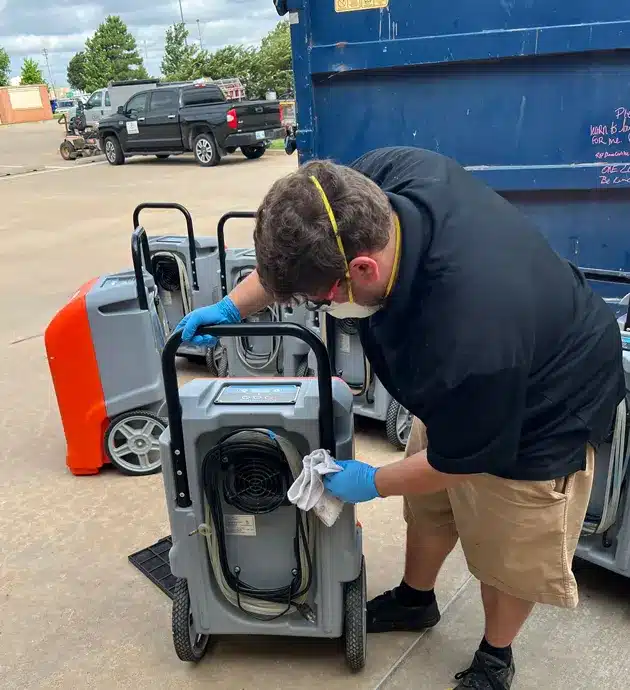
Commercial LGR dehumidifiers and high-velocity air movers are then positioned based on the room's square footage and the drying targets set by IICRC S500 standards. Moisture readings are logged daily until all structural materials reach target levels. Only then is the space cleared for new flooring installation.
If your carpet padding has been soaked, call 405-357-1881 now. We respond 24 hours a day across the OKC metro, including Edmond, Mustang, Norman, and Moore.
FAQs: Carpet Padding Water Damage OKC
Rarely. Rebond foam padding, which is in most OKC homes, cannot be reliably sanitized once saturated. Even if you could extract the moisture, the compressed foam structure traps contamination at a microscopic level. Industry standard practice is to remove and dispose of padding in any significant water event. The cost of new padding is minor compared to the cost of mold remediation from leaving contaminated padding in place. The only scenario where in-place drying of padding is considered is a very small area of clean Category 1 water caught within a few hours.
With commercial drying equipment in place, most subfloors in OKC homes reach target moisture levels within three to five days. Concrete slabs take longer than OSB or plywood subfloors because concrete releases moisture slowly. Homes with crawlspace construction introduce additional variables since moisture can migrate from below. OKC's summer humidity means drying equipment has to work harder than in drier climates, which is one reason consumer dehumidifiers fall short. Daily moisture logging tracks progress and determines when drying is genuinely complete.
Coverage depends entirely on the source of the water. Sudden and accidental events, like a burst pipe or a washing machine supply hose failure, are typically covered under standard homeowners policies in Oklahoma. Gradual leaks that developed over time are routinely denied. Flooding from storm runoff or rising water requires a separate flood insurance policy through the National Flood Insurance Program or a private carrier. Document the damage thoroughly before any cleanup begins, and report to your insurance carrier the same day if possible.
The odor is musty and earthy, similar to wet cardboard or a damp basement. It is often most noticeable when you first enter a room that has been closed up, then fades as you become accustomed to it. If you notice the smell returning after guests comment on it, or if it is stronger near floor level than at standing height, mold growth under the flooring is a likely cause. A musty smell that appeared after a water event and was not there before is not normal odor and should not be ignored or masked with air freshener.
Stop the water source first if it is still active. Shut off the supply valve or main if it is a plumbing failure. Turn off the HVAC system to avoid spreading contaminants through ductwork. Photograph the full affected area including water lines on walls, wet materials, and the source location. Do not run box fans or a household dehumidifier and assume the job is handled. Remove small furniture from the wet area to prevent dye bleed onto carpet. Then call 405-357-1881 immediately. The sooner extraction equipment arrives, the lower the probability of mold colonization and subfloor damage.
Both are serious but in different ways. Wood subfloor panels swell and delaminate within 48 hours of saturation, potentially requiring replacement. OSB is more vulnerable than plywood in this regard. Concrete slabs do not swell, but they absorb and hold moisture for weeks. A slab that feels dry on the surface may still be releasing moisture upward through the concrete, which will re-wet new padding and flooring installed prematurely. Vapor emission testing is the only reliable way to know when a concrete slab is ready for new flooring installation.
Visual inspection requires pulling back the carpet at the edge of the affected area and examining the underside of the padding and the subfloor surface. Mold appears as discoloration ranging from white or gray fuzz in early stages to dark green or black patches in established colonies. It typically starts at the padding-subfloor interface where moisture is highest and airflow is lowest. If your carpet padding was wet for more than 48 hours in OKC's warm, humid conditions and was not professionally dried, treat mold as present until a technician confirms otherwise with testing.
Yes. We serve the full Oklahoma City metro including Edmond, Norman, Mustang, Moore, and surrounding communities, 24 hours a day, every day. When you call 405-357-1881, you reach a live person who can dispatch a crew with extraction and drying equipment. Free estimates are available. The faster we get extraction equipment on site, the better the outcome for your subfloor and the lower your overall restoration cost.